
Is Dr. Robbie Okay? What ‘The Pitt’ Reveals About Leading Through Grief and Chaos
- Antoinette Goosby
- Mar 27
- 7 min read

If you were watching Season 2, Episode 12 of The Pitt ("6:00 PM") with your jaw on the floor, join the club. We need to talk about Dr. Robbie.
Look, we all love a good medical drama. The fast-paced trauma bays, the witty banter between shifts, and the high-stakes decisions that make our own 9-to-5s look like a spa day. But lately, The Pitt has been doing something different. It’s peeling back the starch of the white coat to show us something raw, uncomfortable, and, honestly, a little too relatable for some of us.
Dr. Robbie is spiraling. And while he’s technically the "hero" of the show, episode 12 made it painfully clear: his intentions are still gold, but his internal foundation is cracking in real time (and the ER is basically quicksand). As a Maryland Psych NP team, we see "Dr. Robbies" every single day at Inside and Out Psychiatry. They aren’t all ER doctors, but they are high-achieving young adults, career starters, and "fixers" who are trying to lead through chaos while their own house is on fire.
Let’s dive into why Dr. Robbie is the ultimate case study for burnout, the "Hero Complex," and why "just pushing through" is the biggest lie we tell ourselves.
The Hero Complex: When Saving Others is a Distraction
In "6:00 PM," we saw Dr. Robbie doing that thing high-achievers do when they’re drowning: he starts bargaining with reality. He’s supposed to be leaving PTMC for his sabbatical… but suddenly he’s finding reasons to stay. And not even in a calm, thought-out way—more like a frantic, moralized spiral that screams: If I leave, I’m abandoning everyone. (Cue the martyr complex with a stethoscope.)
And when Duke’s health becomes part of the "maybe I shouldn’t go" logic? Whew. That hit the exact nerve a lot of you live on: I can’t step away because something might go wrong and then it’ll be my fault.
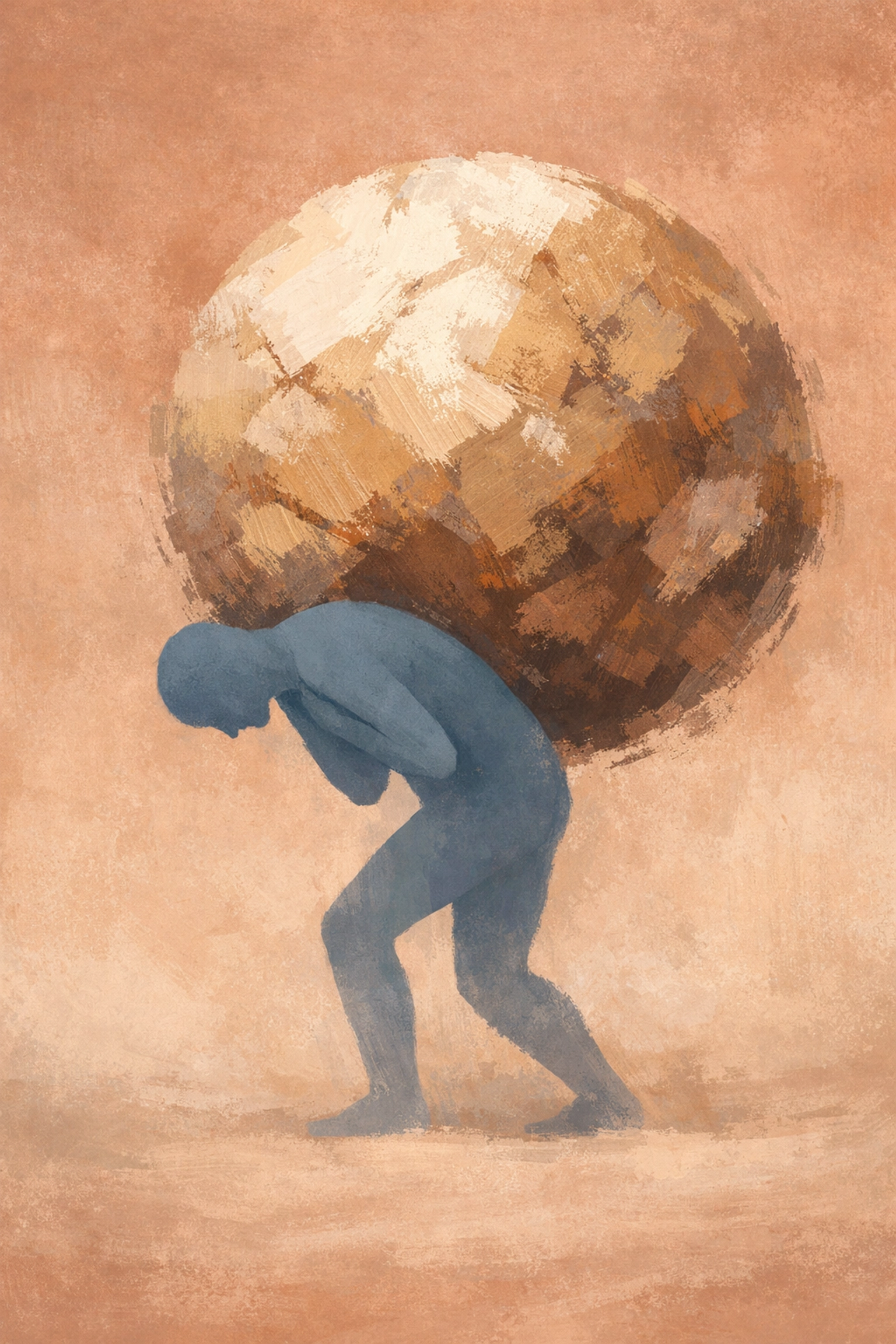
This is what we call the Hero Complex. In the world of holistic psychiatry, we see this often with clients who are "the reliable ones" in their families or workplaces. The Hero Complex isn't just about wanting to help; it’s about a psychological need to be the savior because it gives you a sense of control—especially when everything around you feels like chaos-quicksand.
For Dr. Robbie, staying becomes a way to avoid the emotional free-fall of leaving. If he can just hold the ER together one more hour, one more shift, one more crisis… maybe he doesn’t have to deal with what’s happening inside him. But here’s the thing: you can’t outrun your own nervous system.
Intentions vs. Boundaries: The Road to Burnout is Paved with Good Deeds
Dr. Robbie’s intentions are pure. He cares about his patients. He cares about the integrity of the hospital. But in "6:00 PM," you can literally watch his "good intentions" collide with his emotional instability—and it comes out sideways as passive-aggression, control, and that tight-jaw I’m fine energy that fools exactly no one.
The vibe of the hospital is also… not normal chaos. It’s that quicksand feeling—where the harder you move, the more stuck you get. One crisis blends into the next, communication gets sloppy, tempers get shorter, and suddenly you’re making "leadership decisions" while your body is basically in survival mode.
And then: Nurse Dana.
Robbie confronts her aggressive behavior (finally), and when he decides to bench her, it’s not just a staffing move—it’s a boundary. A messy one, sure. But still a boundary. Because teams in high-stress environments will normalize anything if it keeps the machine running, and "running" is not the same thing as "healthy."
At Inside and Out Psychiatry, we talk a lot about what "culturally responsive care" actually looks like. Part of that care is recognizing that your productivity is not your worth. Dr. Robbie thinks his worth is tied to his ability to endure suffering. He treats his own mental health like a luxury he can’t afford, rather than the fuel he needs to actually do his job.
And here’s the kicker: when you have "good intentions" but zero boundaries, you aren’t leading; you’re just vibrating at a high frequency of anxiety. You become a martyr, and martyrs eventually burn out (and usually take a few people down with them).
The Body Keeps the Score (Even in the ER)
One of the most telling moments in "5:00 PM" wasn't a line of dialogue, it was the physical tension in Robbie’s body. The way his hands shook, the shallow breathing, the way he seemed "locked in" but also completely disconnected from his own skin.
As a Student Dance Movement Therapist, I couldn't help but notice the somatic overload. Dr. Robbie is carrying post-COVID PTSD and the unresolved trauma of losing his mentor. He’s trying to "think" his way out of a body problem.
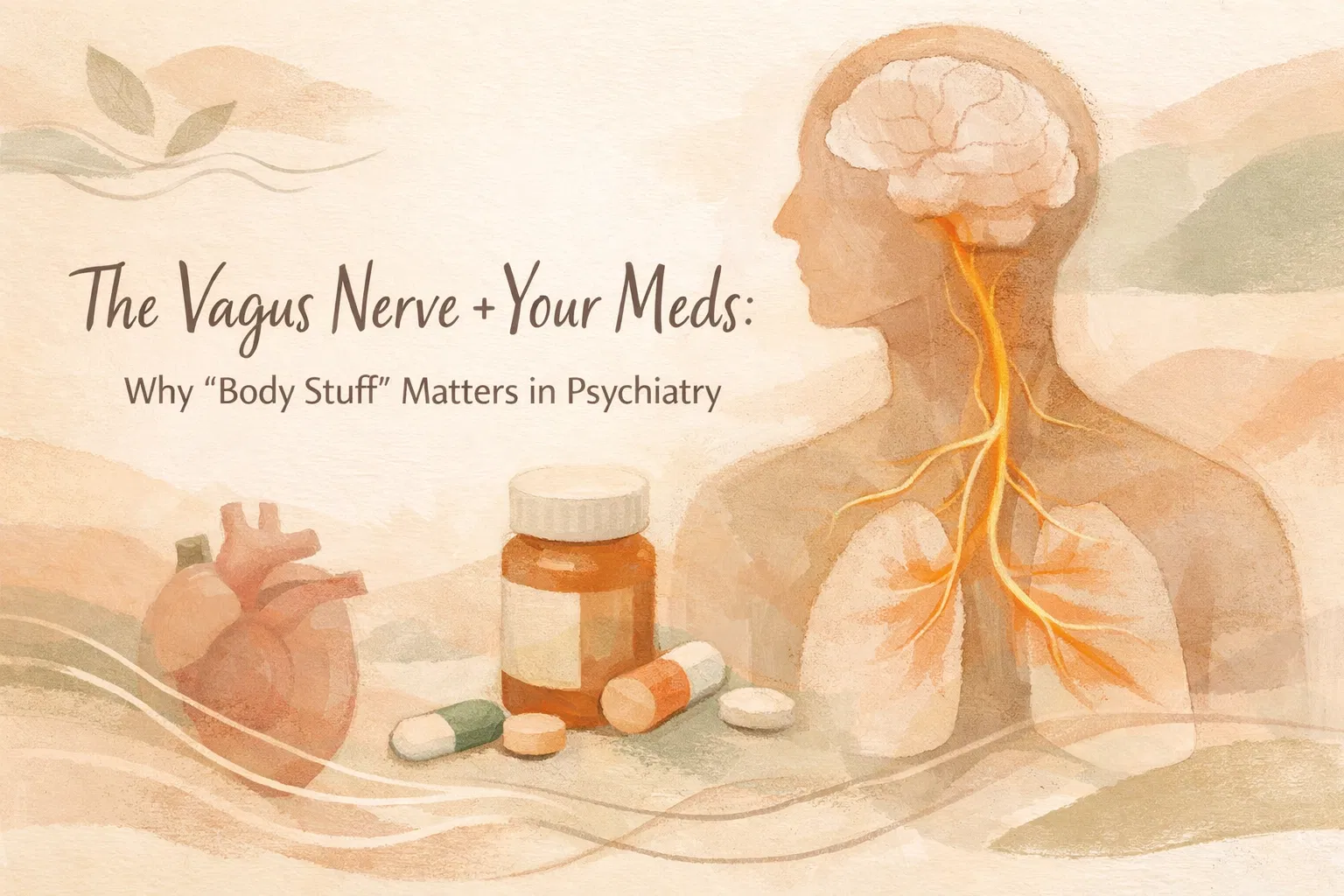
This is why we champion the vagus nerve and somatic awareness at our practice. You can be the smartest person in the room, but if your nervous system is in a constant state of "fight or flight," your decision-making will eventually fail you. Robbie’s panic attacks are his body’s way of saying, "I’m full. I can’t take any more."
Leadership Requires More Than Grit
"6:00 PM" basically screams the truth a lot of high-achievers hate: leading through chaos requires more than just "gritting your teeth." It requires containment. Support. Accountability. And yes—affirming psychiatric care that looks at the whole person, not just the symptoms.
Because on top of the emotional mess, we get the reveal that Robbie reported the drug theft. And that’s where it gets complicated in a way that feels very real: in a high-stress team, accountability can get interpreted as betrayal. Especially when everyone’s exhausted and already feels like they’re one more policy violation away from getting crushed by the system.
Robbie is isolated. He’s trying to be principled, but he’s also unstable—so his "right thing" energy starts blending with irritability, control, and passive-aggression. (You can have values and be dysregulated. Both can be true at the same time.)
If you’re a high-achiever reading this, you’ve probably felt that pressure to be the "Dr. Robbie" of your world. You stay in toxic environments because you think you’re the only one who can "save" it—your job, your family, your friend group, your department, your entire group chat. And stepping away doesn’t feel like rest; it feels like failure.
But let’s be honest: if the place collapses the second you take a break, it was never being "held together"—it was being propped up by your nervous system.
The "White Coat" Struggle is Real
While The Pitt is a fictional show, the struggle Dr. Robbie faces is something I see in the real world every day. There is a specific kind of pressure on "helpers" and "fixers"—doctors, nurses, teachers, parents, and community leaders—to ignore their own pain for the sake of the mission.
We call this the "White Coat" struggle. It’s the belief that you are exempt from the human experience of grief, exhaustion, and trauma because you have a job to do.
And if you’re a high-achiever? It’s even sneakier. Because your martyr complex doesn’t show up wearing a sign that says Toxic. It shows up as:
I’ll just stay a little longer.
They need me.
If I leave, I’m selfish.
If I don’t handle it, no one will.
That’s how people get stuck in workplace quicksand—especially in high-stakes systems like hospitals, schools, and "always on" careers. It’s also how "good intentions" turn into resentment and passive-aggression, because your body is tapped out but your identity won’t let you quit.
At Inside and Out Psychiatry, we provide holistic psychiatry that specifically targets this demographic. If you’re looking for a Maryland Psych NP who gets high-functioning burnout, we’re here. Our approach centers culturally responsive psychiatry and affirming psychiatric care, meaning we look at the whole you—your culture, your context, your nervous system, and the systems you’re surviving in—not just the checklist of symptoms.
Are You Pulling a "Dr. Robbie"?
If you watched the latest episode and felt a pang of recognition when Robbie snapped or when he stared blankly into the distance during his break, it might be time to check in with yourself.
Here are a few signs you might be struggling with Robbie-style burnout:
You feel "numb" instead of "calm."
You’re irritable with the people you’re supposed to be leading.
You feel like you’re the only person who can do things "right."
Your body is giving you signs (headaches, tension, insomnia) that you’re ignoring.
You’re using work as a way to avoid a personal loss or change.
If this sounds like you, please know that "more grit" isn't the answer. You don't need to work harder; you need to heal deeper.
How to Find Your Way Out of "The Pitt"
You don’t have to wait for a total breakdown to seek help. Whether you’re looking for telepsychiatry in Maryland or someone who understands the unique pressures of being a high-achieving young adult, we are here for you.
Our approach is culturally responsive and affirming, meaning we see you in the context of your life, your culture, and your career. We don’t just prescribe meds; we look at the somatic, the emotional, and the systemic factors that are making you feel like you’re in a ER shift 24/7.
Dr. Robbie might not be okay right now, but that doesn't mean you have to follow his lead. You are allowed to be a leader and a person who goes to therapy. You are allowed to be successful and have boundaries.
Let’s Chat
Are you a fan of The Pitt? What did you think of Robbie’s "intentions" in this episode? Do you think he’s going to finally listen to Caleb and get some real help, or are we heading for a Season 2 finale crash?
If you're ready to start your own journey toward holistic wellness, book a session with us today. You don't have to carry the weight of the world: or the ER: on your own.
Stay grounded, stay human.
Comments